
MX: where mail arrives
Think of MX as the delivery address for your domain’s email. It tells other servers which provider should receive incoming messages.
Receiving and sending
Enter a domain to see the public records behind incoming and outgoing email. We show its mail destination, sending rules and domain policy in one report. If you have a DKIM selector, you can check that key too.
See where mail goes and which sending records your domain publishes.
TrekMail is email hosting for your own domain, with guided setup and a free plan to get started.
See how TrekMail works
Made by TrekMail email hosting. Start with free Nano, or try an eligible paid email plan for 14 days. Explore email hosting
Your domain report
This is a public DNS snapshot. It does not test real message authentication, mailbox availability or inbox placement.
Email hosting by TrekMail
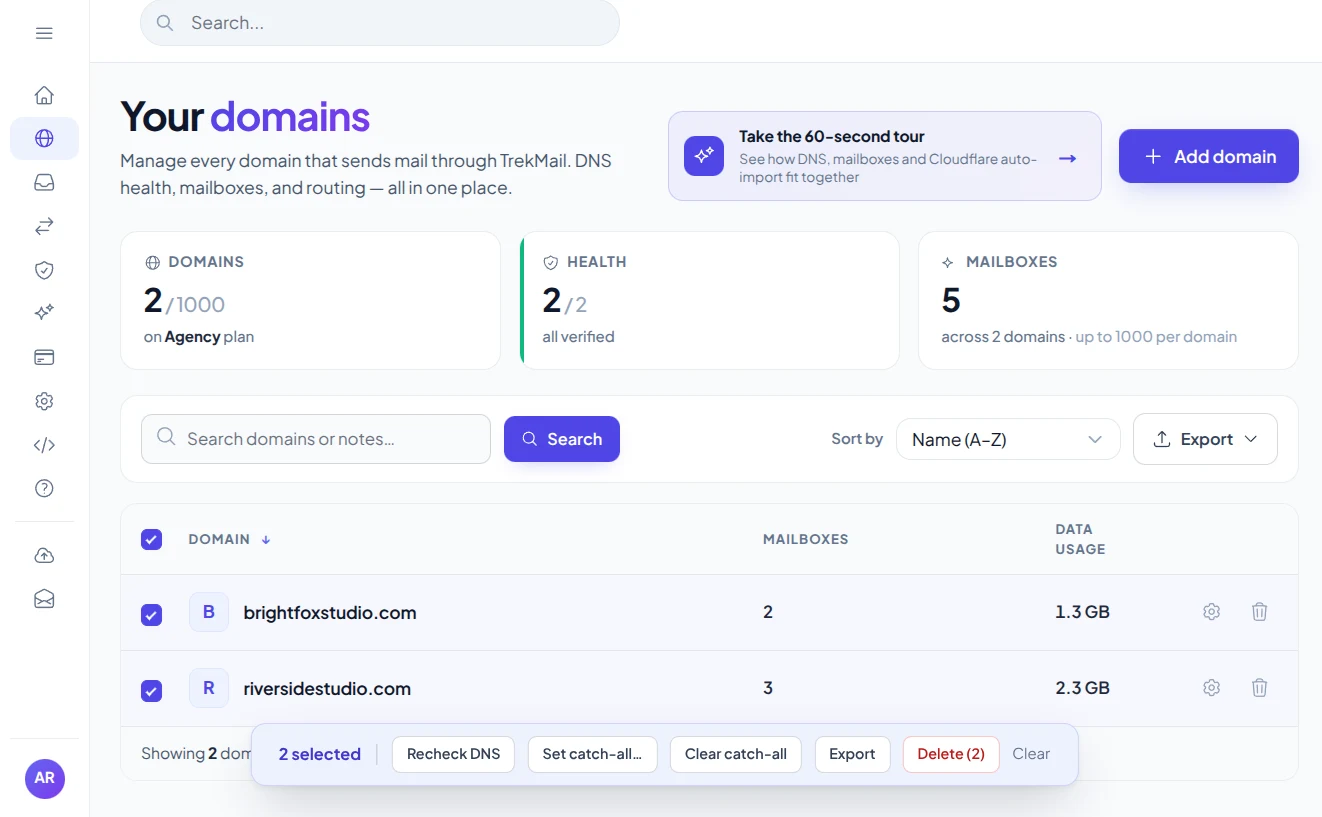
Give your business an inbox that belongs to you. Create mailboxes on your own domain and manage them together in TrekMail.
We generate the DNS records your domain needs for receiving and sending, including SPF, DKIM and DMARC. Follow the setup guide, or publish through a supported Cloudflare connection, then check the result in your dashboard.
Free Nano plan available. No card needed to start.
Bring your domainKeep your business identity.
Follow the setupGet the records and check them.
Moving your email to a new provider? An old receiving record can still point to your previous inbox. Check what is published now, then compare it with your new provider’s setup guide.
The MX record still names your previous provider, or a sending record is missing.
Compare each result with your new provider’s setup guide. Update only the records you understand, then check again after DNS caches have refreshed.
Look first at MX for incoming mail. Then read SPF and DMARC for the sending side. DKIM needs the selector supplied by your provider; we leave it unchecked when you do not have one.
Receiving email, authorizing senders, signing messages and protecting your domain each need a different record.
Think of MX as the delivery address for your domain’s email. It tells other servers which provider should receive incoming messages.

Your website, email host and newsletter may all send for you. SPF lists approved sources. Check that the services you use are included in one policy.

Your provider signs outgoing email. Receivers use a public key on your domain to check that signature. Ask your provider for the selector to look up the right key.
DMARC tells receivers what you want them to do with messages that fail checks for your domain: monitor them, send them to spam, or reject them.
A little knowledge. A better setup.
A new domain, a provider move or a missed message: start with the settings other mail servers can actually see.
Check domainFor an address such as hello@example.com, enter example.com in the email domain checker. You do not need to own the domain to read its public records. The report brings together MX, SPF and DMARC; add your provider’s DKIM selector if you also want to inspect the signing key.
Run a check before editing DNS. Keep your provider’s instructions open so you can compare the receiving destinations and sending policy with the values you were given.
example.com                 MX   → receiving mail servers
example.com                 TXT  → SPF sending policy
selector1._domainkey.example.com  → DKIM public key
_dmarc.example.com           TXT  → DMARC policy
Lookup names explained; these are not DNS values to paste into your account.
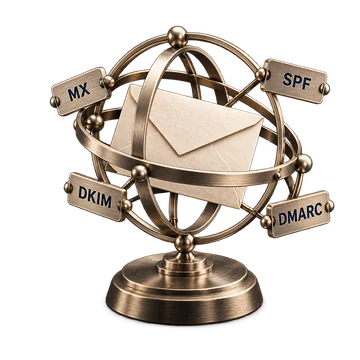
MX identifies where incoming email is routed. SPF describes approved sending sources. DKIM publishes the key receivers use to verify signed messages. DMARC publishes the domain’s policy for mail that fails aligned authentication. They solve different parts of email setup, so finding one does not replace the others.
Make changes at the service that hosts your domain’s DNS. Buying a domain, creating a mailbox and publishing DNS records are separate steps. After a change, check again once cached answers have expired. Keep existing inboxes available during a move until you are satisfied that mail is reaching the new service.
TrekMail gives you the records for your domain and a setup screen to check them. Start on free Nano, then choose a paid email plan when you need sending through TrekMail. The checker above is also available if your inbox is hosted elsewhere.
Practical guides from TrekMail, with setup instructions and deeper explanations for this tool.
Choose a free inbox to get started, or a paid plan for sending through TrekMail. One plan covers your account, with no per-seat fees.
$0/month
Your own domain, your first mailboxes, no credit card.
Sending through TrekMail is included in paid plans. Nano can use your own SMTP service.
Try an eligible paid email plan for 14 days.
For a small business
$4/month
For a growing team
$10/month
For client domains
$29/month
USD prices, billed monthly. Annual options available. Trials require a card and convert to the selected paid plan on the date shown at checkout. Cancel before that date to avoid a charge.
More from TrekMail
Read your business email in TrekMail webmail, or connect your favorite email app. Explore the other products when you need more from your workspace.
Explore email hosting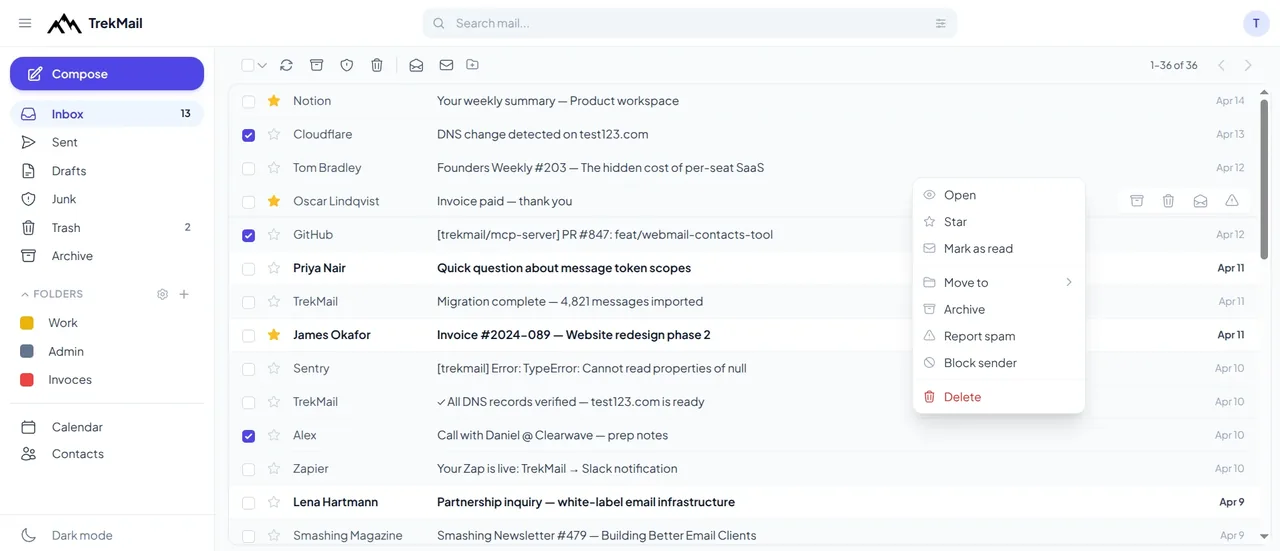
 Email verifierCheck individual email addresses before you use them.Explore email verifier
 Cloud DriveStore and share files alongside your email.Explore Cloud Drive
 AI agent emailGive your workflows an inbox they can work with.Explore AI agent email
 White LabelOffer a branded email experience to your customers.Explore White Label
Good questions. Clear answers.
Find the details you need, then return to the tool when you’re ready.
Check domainNo. Content, recipient engagement, sending reputation and receiver policies also affect delivery. This report checks public DNS records, not reputation or inbox placement.
A domain can use many selectors. There is no complete public list. Find s= in a DKIM-Signature header, and use the domain in d=, or ask the service that sends your mail.
Yes. Enter the exact sending or receiving domain. This version checks DMARC at that exact _dmarc name; it does not discover inherited parent-domain policies.
We query public DNS through Cloudflare. Positive answers are cached up to five minutes, constrained by the returned TTL. Missing answers may be cached for 30 seconds. Your DNS provider’s propagation time can be longer.
This tool checks a domain’s public email DNS records. It does not verify that an individual address exists. Use TrekMail Email Verifier when you need to check an email address.
Open your DNS host’s control panel and compare each result with the instructions from your email provider. The tool reads public records and cannot edit them for you. TrekMail provides domain-specific setup instructions in its dashboard.
Choose a check, enter your domain and get a result. Or generate a new password in your browser. Every tool is free to use, with no account needed.
Free toolSee which services your domain allows to send email and spot common mistakes.
Check SPF
Free toolCheck that your email provider’s public signing key is available.
Check DKIM
Free toolFind out how your domain asks receivers to handle messages that fail checks.
Check DMARC
Free toolFind the mail servers that receive email for your domain.
Look up MX Free tool
Choose a length and characters, then generate and copy a fresh password.
Generate password
Create your TrekMail account, bring your domain and follow the setup. Start with free Nano, or try an eligible paid email plan for 14 days.
Nano needs no card. Paid trials require a card.Access your dashboard, mailboxes and DNS.
By continuing, you agree to TrekMail's Terms and Privacy Policy.